
YWCA and the Real Rebels of the Gilded Age
By Paige Robar & Roxanne Vigil
In HBO’s The Gilded Age, a brief mention of YWCA in season 3 might seem like a small detail in a show best known for opulence and intrigue. But for those who know YWCA, it’s a powerful nod to something deeper. At its core, The Gilded Age is about women across class, race, and background by birth navigating and challenging the rigid constraints of their time. The struggle for self-determination is a central theme of the show; it is also the story of YWCA.
Founded in 1858, just before the Civil War, YWCA emerged during a time of rapid industrialization and social upheaval. Women were moving into cities in search of work, education, and independence. But opportunity came with risk for both Black and White women. Poverty, exploitation, and violence were daily realities, especially for single mothers and working-class women. At the same time, the country was grappling with the aftermath of war and the promise of Reconstruction—a promise that was quickly met with violent resistance. As formerly enslaved people sought education, employment, and civic participation, white supremacist ideologies reasserted themselves through discriminatory laws, violence, and exclusionary practices. The Gilded Age (1870s to early 1900s) saw the rise of Jim Crow segregation and systemic barriers that targeted Black communities. For Black women, this meant facing compounded challenges of racism and sexism.
The Gilded Age was a formative period in YWCA history, with chapters opening across the country including in Texas, Massachusetts, Pennsylvania, Ohio and California. Early leaders laid the foundation for a movement that would grow into one of the most influential women-led organizations in the United States. YWCA chapters quickly gained recognition for their work. In Jacksonville, Illinois, an “industrial school” was established for children aged seven to fifteen, where they were taught reading, typing, and sewing. In Cincinnati, Ohio, a YWCA was formed to assist “self-supporting girls” in need of safer living conditions. As the fight for women’s suffrage gained momentum, YWCA, led by female volunteers without pay, filled a need by providing safe housing, job training, and community support, laying the groundwork for a movement based in emphasizing care, resilience, and resistance.
Meanwhile, in Washington, DC, suffragette Rosetta Lawson envisioned a YWCA chapter that would serve Black women, who were excluded from white YWCA branches due to segregation. Born to an enslaved father and free mother, Lawson recognized the needs of Black women emerging from the Reconstruction era and made history by organizing the first Phyllis Wheatley Branch of YWCA, a space created by and for Black women within a segregated system.
This legacy is powerfully echoed in The Gilded Age through the character of Peggy Scott, a young Black writer and activist navigating post-Reconstruction New York. Her storyline offers a rare and nuanced glimpse into the challenges and aspirations of Black women during this era women who, like Rosetta Lawson, were determined to carve out space for themselves in a society that often excluded them. Peggy’s pursuit of independence, justice, and professional recognition mirrors the mission of YWCA’s Phyllis Wheatley Branch, which provided a safe and empowering space for Black women to thrive.
Through Peggy, the show honors the resilience and leadership of women who built systems of care and community in the face of systemic barriers. This spirit of advocacy and storytelling was also embraced by early YWCA leaders. In 1894, they launched The International Messenger, a publication created by women, for women, to amplify their voices and share their work recognizing, like Peggy, that storytelling is a powerful tool for change.
These visionary women wrote, organized, led, and built platforms for women’s leadership. As depicted in the show, they hosted banquets to celebrate achievements and raise funds, creating public forums where women could be seen and heard. At a time when women were expected to remain in the background, supporting male relatives, YWCA leaders stepped forward to build systems of care. They used their influence to address societal needs and establish safe housing, job training, and child care for women across the country. It was revolutionary then—and it still is.
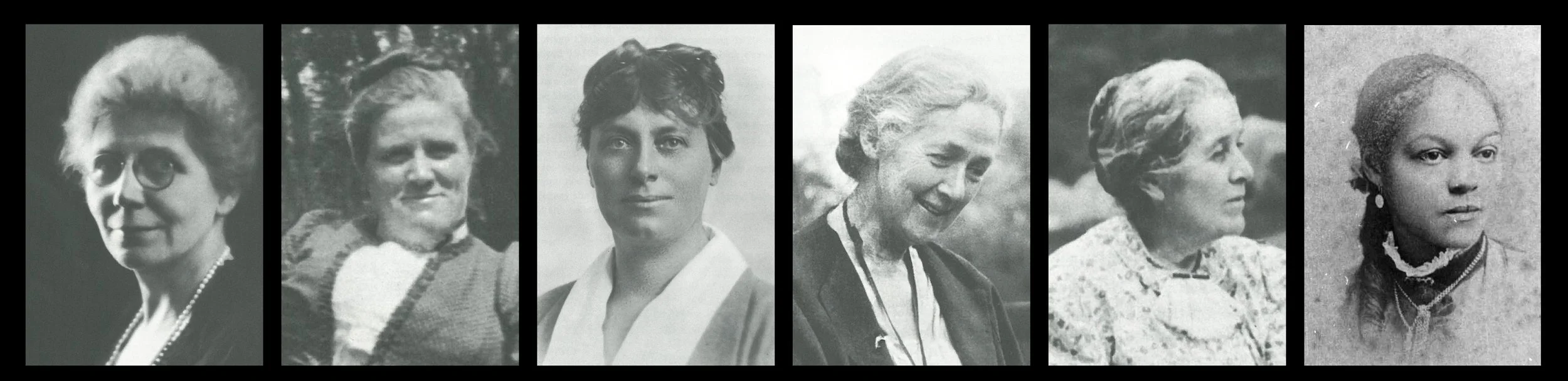
The women featured below each put their unique touch on the trajectory of YWCA and its early stages:
Mabel Cratty: General secretary of the YWCA National Board from 1906 to 1928. She was known as a great leader of the YWCA.
Grace Dodge: Helped to unify the YWCA from 1905 to 1914. She was also a member of the World YWCA Committee. Born in 1856.
Florence Simms: National industrial secretary of the YWCA National Board in the early 1900s. She is known for her desire to improve the lives of women workers.
Emma Bailey Speer: President of the YWCA national board during the early 1900s. While president, she worked for eight-hour workdays for women and organized the YWCA’s efforts during World War I.
Martha Boyden Finley: Served on the YWCA National Board and lived to see the YWCA Centennial.
Rosetta Lawson: Born 1857 in King George, Virginia, she organized the first YWCA Phyllis Wheatley Branch in 1905 to provide care, housing and guidance to Black women and girls coming into the city and seeking employment.
------------------------------------
YWCA’s mission continued to evolve to meet the needs of a country that was rapidly changing. By the mid-20th century, YWCA had desegregated and opened its doors to women of all races, religions, and backgrounds. What began as an organization explicitly for white Protestant women transformed into one of the first truly inclusive women’s movements in the U.S.
In 1970, at the YWCA National Convention, civil rights icon Dr. Dorothy I. Height, who served as National Director of the Center for Racial Justice at YWCA USA from 1965-1977, led YWCA in the passage of its One Imperative, “The Association will thrust its collective power toward the elimination of racism, wherever it exists and by any means necessary.”
With this bold call to action now guiding the YWCA movement, the organization truly became a force for systemic change, committed not only to empowering women, but to dismantling the structures of oppression that hold them back.
Today, YWCA USA is a national network of over 190 Local Associations serving over 1 million women, girls, and families each year. We provide emergency shelter, 24/7 crisis hotlines, advocacy, job training, childcare, and racial justice education.
The YWCA’s mention in The Gilded Age isn’t just a historical nod, it’s a reminder that women have always been building systems of care in the shadows of systems of power. From the parlors of the 1880s to the frontlines of today’s most urgent social issues, YWCA has never stopped showing up.